
YOUTH BASEBALL & SOFTBALL – Spring 2027
Registration Dates
Town Residents: January 4 – March 5, 2027
Non-Residents: January 11 – March 5, 2027
Late Fee: +$10/participant (pending space availability) - Starts February 1, 2027
Registration Fees
Town Residents: $53/participant
Non-Residents: $93/participant
Click here to register: Program Registration
Fall 2026 Baseball/Softball Important Dates:
| Dates | Item |
| February 18 | Coaches Meeting |
| Week of February 22 | Evaluations at Redford Place Park |
| Week of March 1 | Drafts |
| Week of March 8 | Practices begin |
| Saturday, April 3rd | REC Day (Opening Day) |
| TBD | Season ends |
*Dates are subject to change*
*Boy’s baseball and T-ball league age is determined by the participant’s age as of May 1, 2027*
* Girl’s softball league age is determined by the participant’s age as of January 1, 2027*
Coaches Corner
Our volunteer coaches are the heart of our program. This section provides tools, resources, and guidance to help you run fun, safe, and development-focused practices and games. Whether you’re a first-time coach or a seasoned leader, you’ll find everything you need right here.
If you are interested in volunteering as a Head Coach or Assistant Coach for the upcoming season, we’d love to have you join our coaching team! Please complete the steps below. Coach positions are first come first serve. Coach groups are not guaranteed until all coaches have completed the coaching form/background check.
1. Coaching Interest Form
All coaches (Head & Assistant) must complete the pre-season coaching form each season.
Coaches Pre-Season Form:
👉 https://www.cognitoforms.com/TownOfRolesville/CoachesPreSeasonFormBaseballSoftball2026FallSeason
2. Background Check Requirement
To ensure a safe and positive environment for all participants, the Town of Rolesville requires a background check every 12 months for all volunteer coaches.
If this is your first time coaching or it has been one year since your last background check, please complete the screening below:
Background Check Portal:
👉 https://securevolunteer.com/town-of-rolesville-parks-rec/home
Follow the on-screen instructions to submit your information. Once approved, our staff will automatically receive your clearance status.
Ages 4-6 (T-Ball Leagues) - 60 minutes
Focus: Basic fundamentals, engagement, and fun
| Activity | Time | Drills |
|---|---|---|
| Warm-up | 5 min |
|
| Throwing & Catching | 10 min |
|
| Hitting | 15 min |
|
| Fielding | 10 min |
|
| Base Running | 10 min |
|
| Fun Game & Cooldown | 10 min |
|
Ages 7-8 (Coach Pitch League) - 75 minutes
Focus: Refining fundamentals in throwing, glove work, and swing mechanics.
| Activity | Time | Drills |
|---|---|---|
| Warm-up | 10 min |
|
| Throwing & Catching | 15 min |
|
| Hitting | 15 min |
|
| Fielding | 15 min |
|
| Base Running | 10 min |
|
| Game Simulation & Cooldown | 10 min |
|
Ages 9-10 (Mustang League - First League with Player Pitching) - 90 minutes
Focus: Strengthening mechanics, increasing game awareness, refining skills
| Activity | Time | Drills |
|---|---|---|
| Warm-up | 10 min |
|
| Throwing & Catching | 15 min |
|
| Hitting | 20 min |
|
| Fielding | 20 min |
|
| Base Running | 10 min |
|
| Live Play & Cooldown | 15 min |
|
Ages 11-12 (Little League) - 90 minutes
Focus: Game strategy, advanced techniques, and mental approach
| Activity | Time | Drills |
|---|---|---|
| Warm-up | 10 min |
|
| Throwing & Catching | 15 min |
|
| Hitting | 20 min |
|
| Fielding | 20 min |
|
| Base Running | 10 min |
|
| Live Scrimmage & Cooldown | 15 min |
|
Ages 7-8 (Coach Pitch) - 75 minutes
Focus: Basic fundamentals, Fun, and Confidence Building
| Activity | Time | Drills |
|---|---|---|
| Warm-up | 10 min |
|
| Throwing & Catching | 20 min |
|
| Drills | 20 min |
|
| Mini Game | 15 min |
|
| Wrap-Up | 10 min |
|
Ages 9-10 (Fastpitch/Player Pitch) - 90 minutes
Focus: Game Readiness, Mechanics, and Team Play
| Activity | Time | Drills |
|---|---|---|
| Warm-up | 15 min |
|
| Skill Development | 30 min |
|
| Drills | 20 min |
|
| Game Simulation | 15 min |
|
| Cool Down | 10 min |
|
| Additional Softball Coach Resources |
|---|
| Resource | Links |
|---|---|
| Ted Talks | |
| Articles | |
| Website | |
| Ted Talks for Parents |
League Rules & Policies
To ensure a safe, fun, and development-focused experience for all participants, our baseball and softball programs follow the guidelines below. Please review these policies prior to the start of the season.
All participants, players, coaches, parents, and spectators are expected to uphold the values of respect, integrity, and positive behavior. Unsportsmanlike conduct will result in warnings, suspensions, or removal from the league.
Our goal is to create an environment where fun, learning, and character development come first.
Parents and guardians are essential in supporting a positive environment. We expect all spectators to:
- Encourage all players, not just their own
- Respect coaches, umpires, and staff
- Refrain from negative comments or yelling at officials
- Model good sportsmanship at all times
- Follow all park and league rules
Disruptive behavior may lead to removal from the facility or further action.
Coaches serve as role models and leaders within our program. All coaches agree to:
- Prioritize player development, safety, and fun
- Provide positive instruction and feedback
- Follow playing time and rotation guidelines
- Communicate respectfully with officials, players, and parents
- Promote sportsmanship and uphold league rules
- Maintain professionalism at all times
Violations may result in suspension or coaching removal.
As a recreational program, balanced participation is a core value. All players should receive:
- Equal or near-equal playing time
- Opportunities to learn multiple positions (age appropriate)
- A positive and inclusive game-day experience
Competition is encouraged, but not at the expense of player development or fairness.
Equal playing time isn’t optional it’s essential. At this age, and especially in a developmental environment, every child deserves the same opportunity to learn, play, and grow, not just those who may currently be more advanced.
Player Development Resources
Our goal is to help players grow on and off the field. The following resources support skill development, confidence, and healthy habits throughout the season.
Player development looks different at each stage. Below are general benchmarks for what players should be working toward in each age group:
Ages 4–6
- Basic throwing mechanics (step, point, throw)
- Catching with two hands
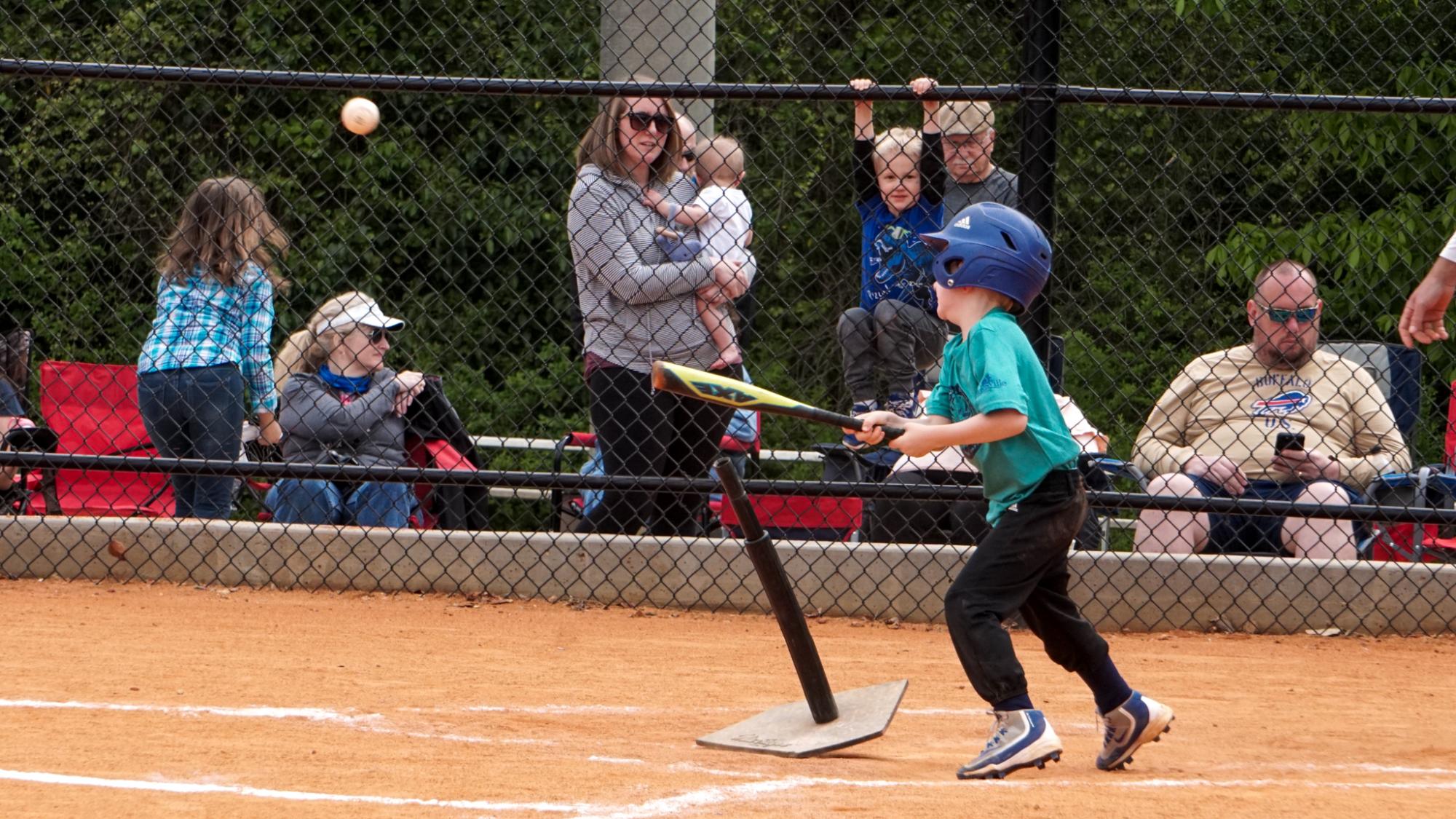
- Proper batting stance and grip
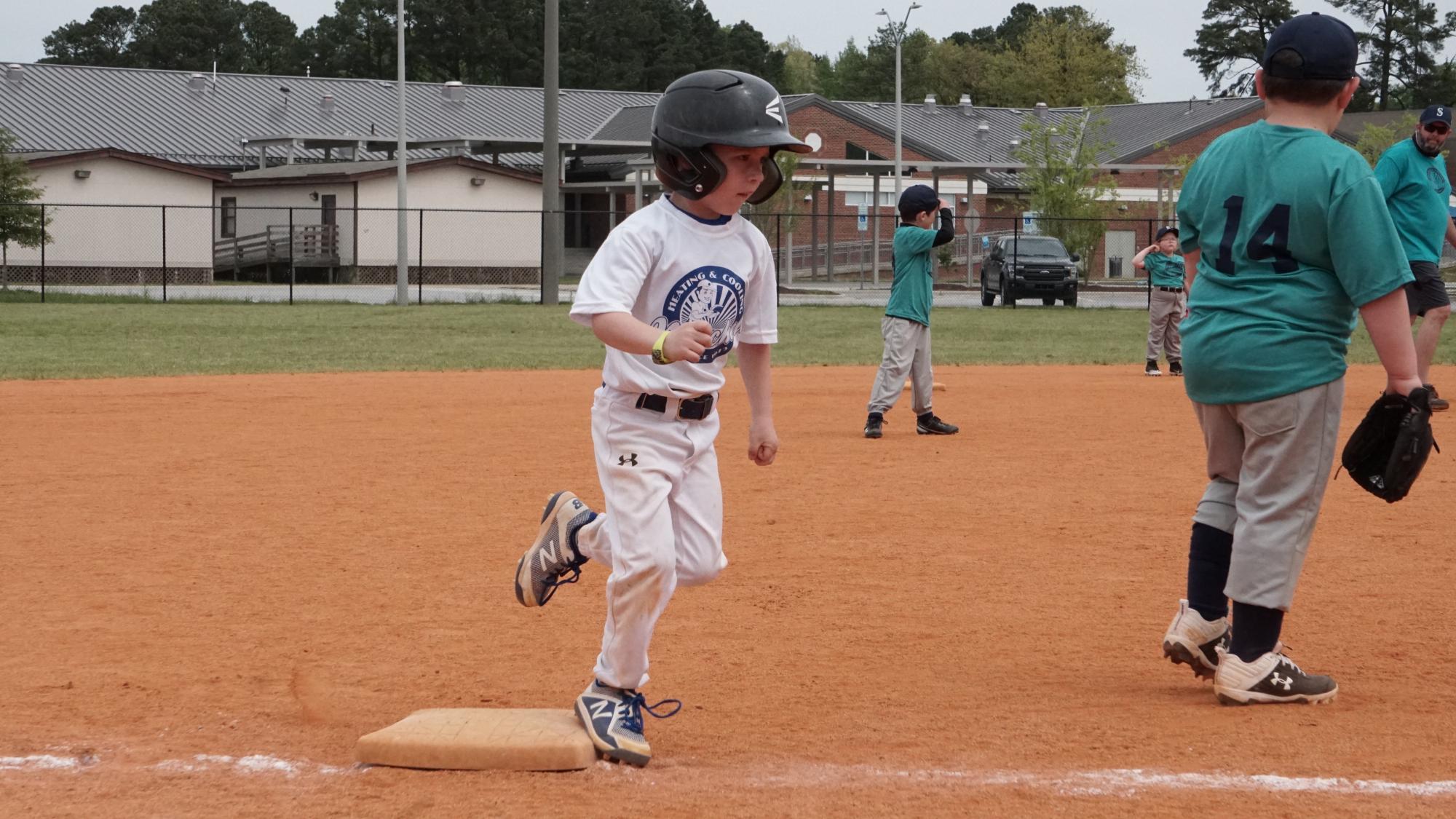
- Running through first base
- Learning fielding positions and basic field awareness
- Understanding simple game concepts (outs, bases)
Ages 7–8
- Consistent throwing accuracy
- Catching with glove-only hand
- Fielding grounders with proper “ready position”
- Making routine throws to first base
- Bat-to-ball contact and improved swing path
- Introduction to base running decisions (force outs, tagging)
Ages 9–10
- Throwing with proper arm slot and body rotation
- Backhand and forehand ground balls
- Catching pop flies with proper footwork
- Hitting for contact and power balance
- Understanding cutoffs and relays
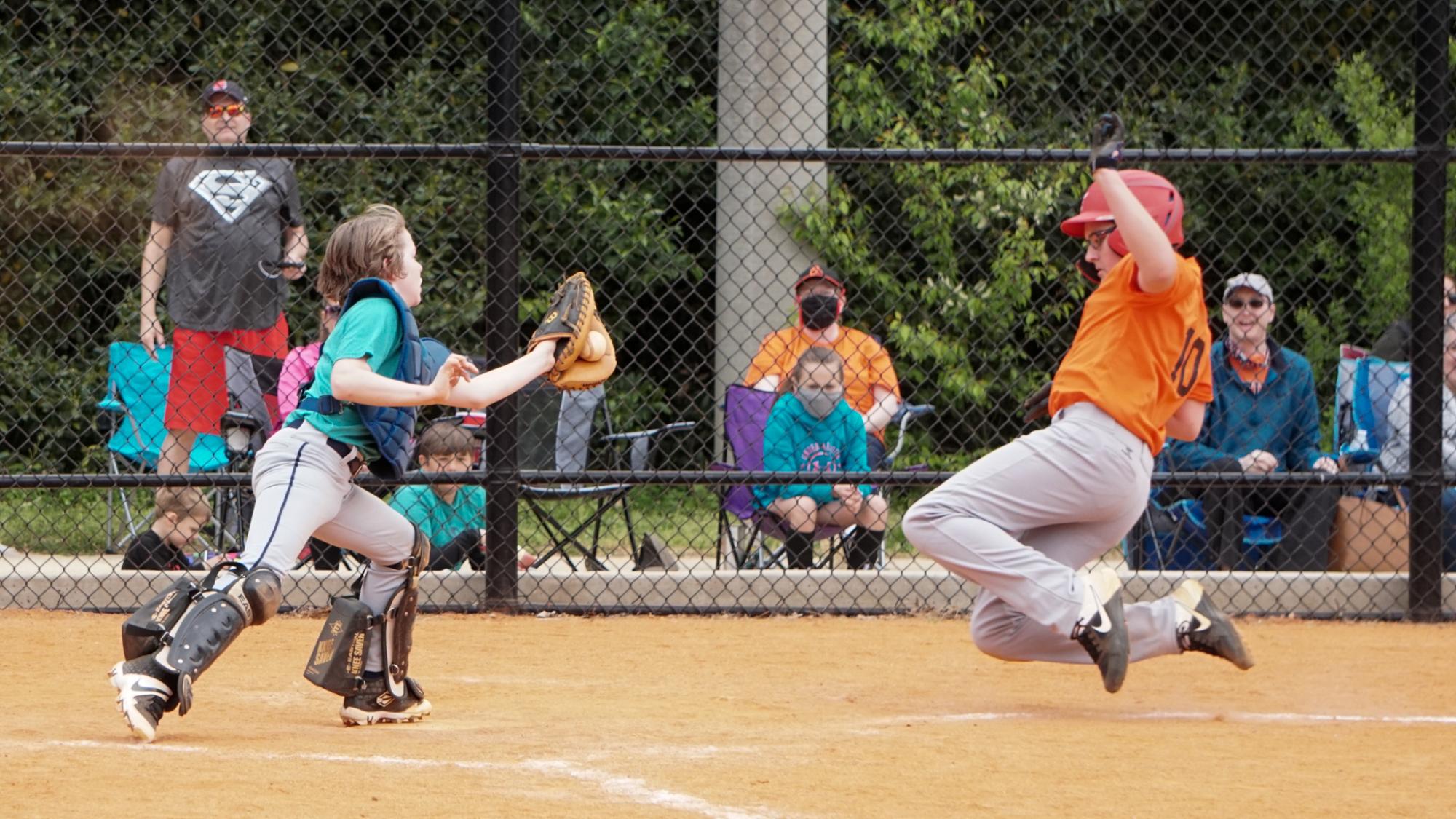
- Proper sliding technique
- Introduction to pitching fundamentals (if applicable)
Ages 11–12
- Advanced defensive reads (charge, drop step, angles)
- Consistent throwing strength and accuracy across the field
- Situational hitting (moving runners, pitch selection)
- Pitching mechanics, grips, and basic strategy
- Advanced base running awareness (reads, leads where allowed)
- Mental game skills (focus, routine, resilience)
Throwing
- Wall target throwing (accuracy & mechanics)
- Towel drill for arm path
- Balance drills for stability and control
Hitting
- Tee work focusing on swing path
- Fence drill (avoids casting hands)
- One-knee swings to isolate upper body mechanics
Fielding & Glove Work
- Wall grounders (short-hop reactions)
- Tennis ball quick hands drills
- Forehand/backhand footwork patterns in small spaces
These can be done in a driveway, yard, garage, or even indoors with soft balls.
Keeping players fueled properly helps performance and safety:
- Hydrate early and often (don’t wait until practice starts)
- Water is preferred; sports drinks only for extended heat or tournaments
- Pre-game snacks: fruit, granola bars, peanut butter crackers
- Avoid: heavy meals right before activity
- Post-game recovery: protein + carbs (yogurt, sandwich, chocolate milk)
Encourage families to send players with their own labeled water bottle every practice and game.
We believe strong mental skills are just as important as physical skills.
Confidence
- Praise effort and improvement, not just outcomes
- Build simple routines (deep breath before pitching/hitting)
Resilience
- Teach “next play mentality”—mistakes are opportunities to learn
- Encourage teammates to support each other after errors
Handling Failure
- Normalize strikeouts, errors, and missed plays
- Focus on growth and progress
- Encourage players to verbalize what they learned rather than what went wrong
Mindset Matters
Our mission is to help youth athletes grow not only as players, but as teammates, leaders, and confident young people.
Equipment Guide
Having the right equipment helps players stay safe, learn proper technique, and enjoy the game. Below is a helpful overview of required gear, recommended items, and buying tips for new families.
All players must have the following for every practice and game:
- Glove (proper size for age; see chart below)
- Batting Helmet (meets NOCSAE safety standards)
- Athletic Shoes or Cleats
- Molded (rubber) cleats only — no metal cleats
- Baseball/Softball Pants (color determined by coach/team)
- Socks (color determined by coach/team)
Water Bottle (labeled with player’s name)
These items are encouraged but not required:
- USA Baseball–approved Bat (baseball) or ASA/USA Softball–approved Bat (softball)
- Batting Gloves
- Personal Bat Bag
- Hat/visor
- Protective Cup (boys) or sliding shorts
Baseball Bats:
- Must be stamped USA Baseball (USABat).
- USSSA bats are not allowed unless otherwise noted for specific divisions.
- Max barrel size and length-to-weight ratio may vary by division.
Softball Bats:
- Should have the USA Softball (ASA) certification stamp.
- Younger ages may use lighter bats for easier swing mechanics.
Basic Bat Sizing Guide
A quick reference for parents:
- Ages 4–6: 24"–26"
- Ages 7–8: 26"–28"
- Ages 9–10: 28"–30"
- Ages 11–12: 30"–32"
Players should be able to hold the bat straight out with one hand for 8–10 seconds without dropping it.
| Age Group | Recommended Glove Size |
|---|---|
| 4–6 | 9"–10" |
| 7–8 | 10"–10.5" |
| 9–10 | 10.5"–11" (baseball) / 11"–11.5" (softball) |
| 11–12 | 11"–11.5" (baseball) / 11.5"–12" (softball) |
Position tips:
- Infielders typically use smaller gloves for quicker transfers.
- Outfielders may prefer slightly larger gloves for reach and ball security.
All helmets must:
- Display the NOCSAE safety seal
- Have a secure chin strap (recommended for younger divisions)
- Fit snugly without moving side-to-side
- Include a face mask/cage for softball (strongly recommended for baseball ages 4–8 and required at some levels)
Players should not share helmets for hygiene reasons.
Catcher’s gear is provided to each team, but players may use their own. Full catcher’s gear includes:
- Helmet with full face mask & throat guard
- Chest protector
- Leg guards
- Catcher’s mitt (optional personal upgrade; not required)
Proper fitting is important for mobility and safety. Coaches will assist catchers with putting gear on correctly.
Helpful Tips:
- Try before you buy when possible. Glove fit matters more than brand.
- Avoid bats that are too long or too heavy; they slow development.
- Many sporting goods stores offer sizing help (Dick’s, Academy, etc.)
- Starter gear sets (helmet + bat + glove) can be an affordable option for young beginners.
- Ask your coach or athletic staff if you’re unsure about sizing or certification standards.
Budget-Friendly Options:
- Second-hand stores (Play It Again Sports)
- Community Facebook groups or parent exchanges
- End-of-season clearance sales
Frequently Asked Questions (FAQ)
Find quick answers to the most common questions families have about our baseball and softball programs.
Teams are created based on age division:
- Ages 5U & 6U:
We do our best to keep players grouped with friends, classmates, or others from similar schools and neighborhoods. Our goal at this level is to create a fun and familiar environment that supports learning and early development. - Ages 7 & Up:
Players participate in a pre-season evaluation to assess basic skill levels. Following evaluations, teams are formed through a coach-conducted draft to promote roster balance and competitive fairness across the league.
We do accept teammate requests for players in ages 4–6, and we do our best to honor these when possible. However, requests are not guaranteed, as roster balance and fairness are our top priorities.
For ages 7 and up, players are placed on teams through a pre-season evaluation and coach draft process, which means teammate requests cannot be accommodated in these divisions. This ensures competitive balance and an enjoyable experience for all participants.
If your child is unable to attend evaluations, they will still be placed on a team. Players who miss evaluations are marked as “Non-Evaluated” and will be randomly assigned to a roster after all evaluated players have been drafted.
Please note:
Players who do not participate in evaluations will not be eligible for All-Stars for that season. Evaluations help ensure accurate placement and fair All-Star selection.
Non-attendance or non-participation in a program does not entitle a participant to a refund.
Our refund policy for Athletics is as follows:
- 100% Refund
If the department cancels the athletic league, program, or class. - Standard Refund Window
A 100% refund (minus a $5 administrative fee) is available no later than two weeks after the first assigned team practice.
After the second week of practice, refunds will not be granted. - Injury Refunds
If a player is injured during the first two games of the season, a refund may be issued.
After the second game, no refunds will be provided.
Practices and games will be held primarily Monday–Thursday. Fridays and Saturdays may be used as needed for make-up dates or rescheduled games. Our REC Day/Opening Day celebration will take place on Saturday, April 11th.