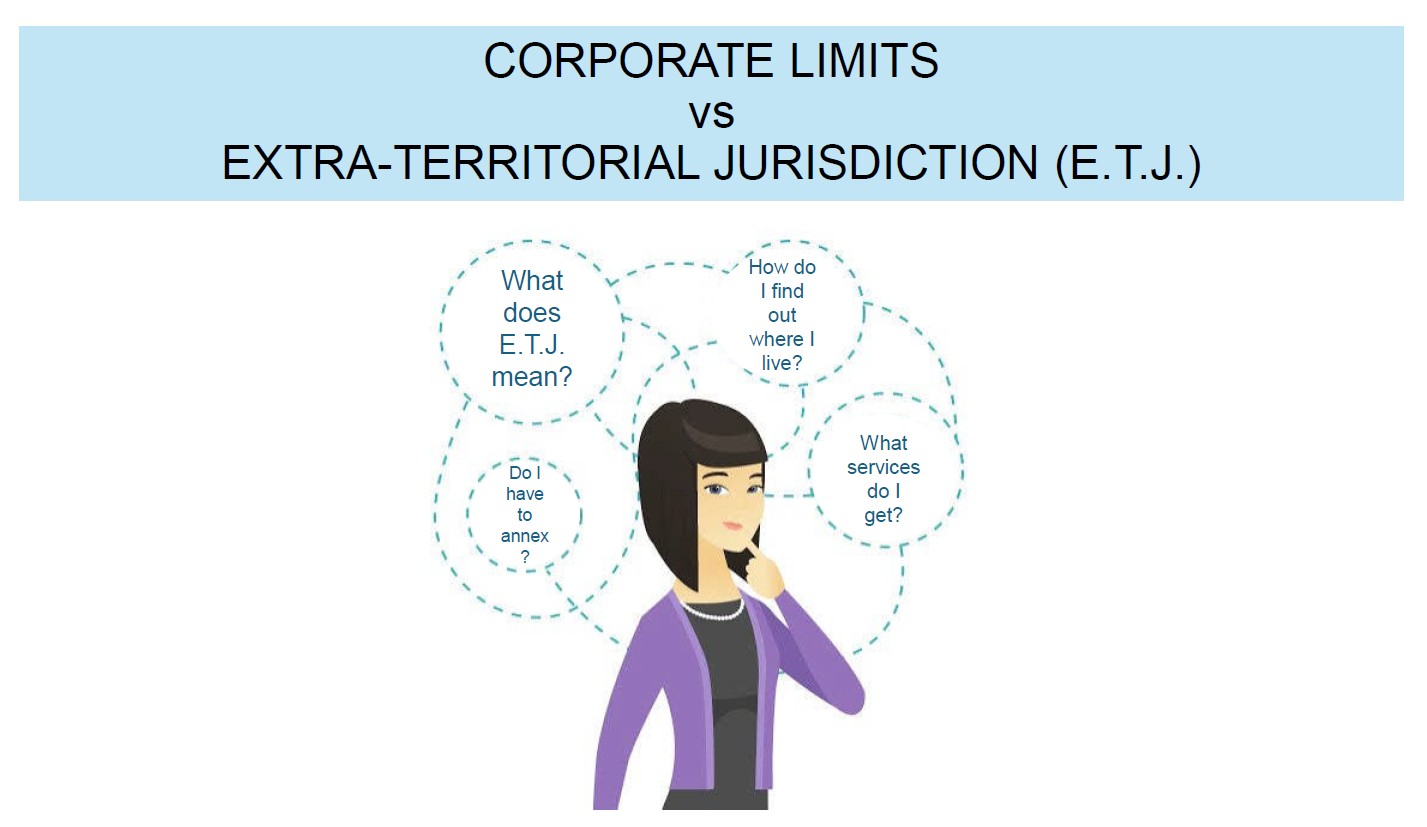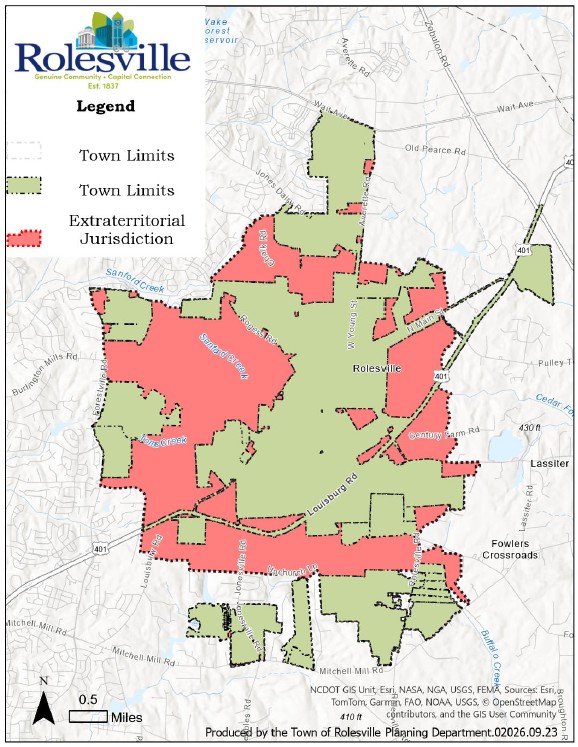
North Carolina General Statue 160D-202 - https://www.ncleg.gov/EnactedLegislation/Statutes/PDF/BySection/Chapter_160D/GS_160D-202.pdf - enables a municipality to extend land-use planning, zoning, and development regulations up to three miles beyond the Town's corporate limits. The breadth or how wide and where that extension can occur is dictated by multiple factors, including the population of the municipality, and pre-arranged agreements with nearby municipalities as to where those ultimate extents are agreed upon. In 2026, with an in-town corporate limit population exceeding 10,000 residents, the extra-territorial jurisdiction may be extended 2 miles from existing Town limits; when population exceeds 25,000 residents, that distance grows to a 3 mile distance.
Rolesville ETJ had 2 major expansions, detailed below.
2004 -
2009 -
Below are some common questions in regards to properties within an Extra-territorial jurisdiction:
- Does a property/owner get assessed the Town's property or personal property tax rates? Answer: No.
- Do the property owners get to vote for political candidates in the Town (For Rolesville, this is the Mayor and the 5 members of the Board of Commissioners)? Answer: No.
- What is the history about the concept of ETJ? Answer: According to information put out by the University of North Carolina School of Government (UNC-SOG), in 1912 the State General Assembly gave the City of Greensboro authority to implement sanitary sewer requirements outside that City's limits, up to a mile. This is noted as a method of preventing incompatible Uses occurring, which is the bedrock of traditional zoning regulations. Post World War II, the State began granting more Cities the authority to create ETJ's to extend land use requirements to those areas.
- Why does ETJ exist, why
- What are the benefits of ETJ to the Town corporate entity?
- What are the benefits to the property owners in the ETJ? Answer: Residents within an ETJ are eligible, and even required, to be part of the resident mix on advisory boards like a Planning Board/Commission and on the decision-making body of the Board of Adjustment; this recognizes the fact that the land use policies and laws of a Town extend to the ETJ and thus those residents should serve on the Board that work with those topics.